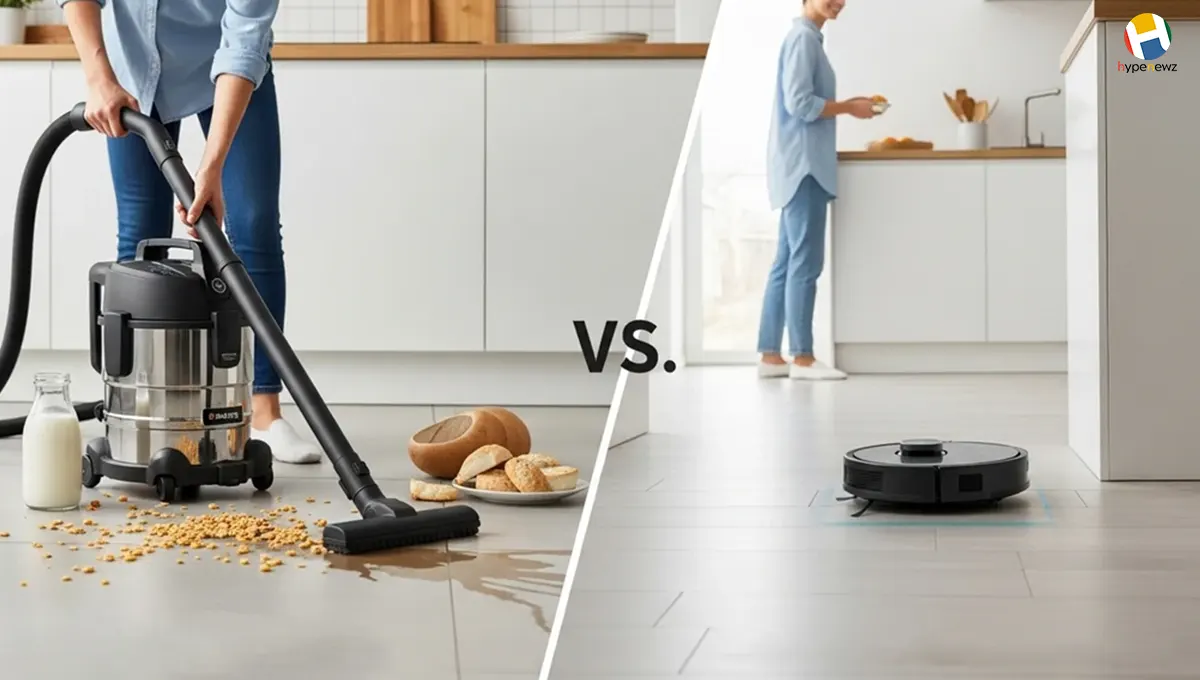
Robot Vacuum vs Regular Vacuum: Is the Upgrade Actually Worth It for the Average Home
Quick Overview
A robot vacuum promises cleaner floors without the daily effort of pushing a vacuum around your home. But does this convenience justify the extra cost, or is a regular vacuum still the smarter choice? For the average American household, the answer depends on floor types, pets, available space, and how often cleaning is needed. Robot vacuums are useful for picking up everyday dust, crumbs, and pet hair, while traditional vacuums generally offer better control for deep cleaning, stairs, upholstery, and stubborn debris. Some modern robot models also include smart mapping, automatic dirt disposal, and mopping features. Before upgrading, it is worth understanding what each option does best and whether automation will genuinely make your cleaning routine easier.
Robot Vacuum vs Regular Vacuum: What Is the Real Difference?
The biggest difference between a robot vacuum and a regular vacuum is how they fit into your cleaning routine. A robot vacuum handles routine floor cleaning automatically, while a traditional vacuum gives you direct control over where and how you clean.
Robot vacuums can navigate rooms, follow scheduled cleaning routines, and return to their charging stations independently. Higher-end models may also offer smart mapping, obstacle detection, self-emptying docks, and mopping functions.
Regular vacuums, including upright, canister, and cordless stick models, require manual operation. However, they are generally more versatile when dealing with stairs, furniture, tight corners, and intensive cleaning jobs.

Robot vacuums are particularly useful for routine maintenance, but they should not automatically be expected to replace a full-sized vacuum. Their performance varies by model and floor type.
The real question behind robot vacuum vs regular vacuum worth it is not simply which machine is better. It is which one handles the cleaning tasks your household needs most.
Do Robot Vacuums Actually Clean Well?
Yes, robot vacuums can clean well, particularly when used regularly on hard floors and low-pile rugs. However, their results depend on the model, navigation system, suction performance, brush design, and the surfaces being cleaned.
If you are wondering do robot vacuums actually clean well, consider what happens during everyday use.
Where Robot Vacuums Perform Well
- Everyday dust and crumbs: Scheduled cleaning helps prevent small amounts of dirt from accumulating.
- Pet hair maintenance: Suitable models can collect loose hair from hard floors and some carpets.
- Hardwood, tile, and laminate: These surfaces are generally easier for robot vacuums to navigate and clean.
- Under furniture: Their low profiles can help them reach beneath beds, sofas, and cabinets when sufficient clearance is available.
- Regular cleaning schedules: Frequent runs can keep floors looking tidier between deeper cleaning sessions.
Where They May Struggle
Thick carpets, tangled cables, cluttered rooms, narrow corners, and stairs can create challenges. Robot vacuums may also miss some debris or struggle with embedded dirt that requires more intensive cleaning.
Traditional vacuums usually offer better control over concentrated messes, edges, upholstery, and carpeted stairs. For homes with several carpeted rooms or frequent spills, keeping a regular vacuum is often practical.
The takeaway is simple: robot vacuums are effective maintenance tools, but their convenience does not guarantee a deeper clean in every situation.
Is a Robot Vacuum Worth Buying for Home?
The answer to is a robot vacuum worth buying for home depends on how much time you spend cleaning and whether your home is suitable for automated navigation.
A robot vacuum can be a worthwhile upgrade if you have a busy schedule, mostly hard flooring, pets that shed, or a household that produces frequent crumbs and dust. Instead of waiting until the floor looks dirty, you can schedule regular cleaning to maintain it.
However, the investment may be harder to justify if you live in a small home that takes only a few minutes to vacuum manually, have many stairs, or need frequent deep cleaning.
Signs You Could Benefit From a Robot Vacuum
- You want floors cleaned while you work or relax.
- Your home has large, relatively uncluttered floor areas.
- You deal with daily dust, crumbs, or loose pet hair.
- You prefer scheduled cleaning over occasional intensive sessions.
- You are comfortable maintaining an app-connected appliance.
Signs a Regular Vacuum May Be Enough
- You have mostly thick or high-pile carpets.
- Your home has multiple staircases.
- You frequently clean furniture, mattresses, or car interiors.
- You want to target specific spots immediately.
- Your existing vacuum already handles your cleaning needs efficiently.
Remember to factor in the purchase price, replacement filters, brushes, dust bags, mop pads, and potential battery replacement. Convenience is valuable, but it should fit your household budget.
Roborock vs Regular Vacuum Comparison
A roborock vs regular vacuum comparison highlights the difference between automated maintenance and hands-on cleaning. Roborock offers robot vacuum models with features such as smart navigation, adjustable cleaning settings, and, on selected models, self-emptying docks and mopping capabilities.
A regular upright or stick vacuum, meanwhile, can be more practical for detailed cleaning and areas that robots cannot reach.
|
Feature |
Robot Vacuum |
Regular Vacuum |
|
Operation |
Automated cleaning schedules |
Manual operation |
|
Daily maintenance |
Convenient for frequent runs |
Requires time and effort |
|
Deep carpet cleaning |
Varies by model and carpet type |
Generally better control and performance |
|
Stairs |
Cannot climb or clean stairs independently |
Suitable with the right attachments |
|
Furniture and corners |
Depends on design and navigation |
Easier to target manually |
|
Pet hair |
Useful for routine surface pickup |
Better suited to concentrated messes and deep cleaning |
|
Smart features |
Mapping, scheduling, and app controls on compatible models |
Varies; many models have fewer automated features |
|
Maintenance |
Brushes, filters, sensors, and possibly mop systems |
Filters, brush rolls, bags, or dust bins |
|
Best role |
Routine floor maintenance |
Detailed and intensive cleaning |
A robot vacuum from Roborock may reduce how often you need to vacuum manually, particularly if your home has suitable floors and a manageable layout. However, choosing a model with a high advertised suction figure alone does not guarantee superior real-world cleaning. Brush design, navigation, carpet performance, and maintenance matter too.
The best setup for many households is to use a robot vacuum for regular floor upkeep and keep a conventional vacuum for deeper or targeted cleaning.
Best Robot Vacuum for an Average Home in 2026
Choosing the best robot vacuum for average home 2026 means focusing on practical features instead of paying for technology you may rarely use.
1. Reliable Navigation
Look for a model that maps rooms efficiently, avoids common obstacles, and supports room-specific cleaning. Reliable navigation helps prevent repeated passes and missed areas.
2. Suitable Suction and Brush Design
Homes with pets or carpets should prioritize tested hair pickup and carpet performance. Hard-floor households may place more emphasis on fine-dust collection and edge cleaning.
3. Self-Emptying Convenience
Some models automatically transfer collected debris into a larger dock-mounted container. This reduces how frequently you need to empty the robot, although dust bags and dock components still require attention.
4. Battery Life and Floor Coverage
Check whether the robot can clean your main living areas in one run. Larger homes may benefit from recharge-and-resume functionality and multi-floor mapping.
5. Mopping Features
Combo models can help maintain hard floors, but mopping capability varies. A basic mop attachment should not be treated as a substitute for scrubbing away stubborn stains.
6. Maintenance and Running Costs
Check the price and availability of replacement filters, brushes, dust bags, and batteries. A cheaper robot may become less attractive if replacement parts are costly or difficult to find.
For most households, a dependable midrange model with good navigation, suitable cleaning performance, and manageable maintenance is a sensible starting point. Premium features are worthwhile only when they solve a genuine household problem.
How to Get the Most Out of a Robot Vacuum
Even a well-designed robot vacuum needs a little preparation to perform consistently.
- Clear cables, socks, and small toys from the floor before scheduled cleaning.
- Keep sensors and charging contacts clean according to the manufacturer's instructions.
- Remove tangled hair from brushes and check filters regularly.
- Set room-specific cleaning schedules for high-traffic areas, such as kitchens and entryways.
- Use no-go zones to prevent the robot from entering areas with loose cables or delicate objects.
Good navigation matters just as much as suction. Consumer testing guidance emphasizes that robotic vacuums work best when the home's layout and floor surfaces suit their capabilities.
Conclusion: Is the Upgrade Actually Worth It?
For the average American home, a robot vacuum is worth considering if you want to reduce everyday cleaning effort and keep floors consistently tidy. It is particularly useful for hard floors, low-pile rugs, and routine pet-hair pickup.
However, a regular vacuum remains a practical choice for deep cleaning, stairs, upholstery, and stubborn messes. If your budget allows, combining the two can provide the best balance of convenience and cleaning performance.
The final verdict: Upgrade for convenience, not the assumption that a robot vacuum will outperform every traditional model. Choose according to your flooring, household habits, and cleaning priorities.
Frequently Asked Questions
1. Is a robot vacuum worth buying for an average home?
Yes, if you value automated cleaning and have suitable flooring. It can reduce the effort involved in daily maintenance, although homes with thick carpets, stairs, or significant clutter may still need a traditional vacuum.
2. Do robot vacuums actually clean as well as regular vacuums?
They can handle everyday dust, crumbs, and surface debris effectively, but traditional vacuums generally offer greater versatility and are often better for deep carpet cleaning and targeted messes.
3. What is the best robot vacuum for an average home in 2026?
Look for reliable navigation, effective brush design, appropriate carpet performance, sufficient battery life, and affordable replacement parts. The ideal model depends on your floor types, home layout, pets, and budget.
4. Can a robot vacuum replace a regular vacuum completely?
Not for most households. Robot vacuums cannot independently clean stairs, furniture, or other above-floor surfaces. Keeping a regular vacuum for occasional detailed cleaning is often more practical.
5. Is a self-emptying robot vacuum worth the extra cost?
It can be worthwhile if you run the robot frequently or have pets that shed. A self-emptying dock reduces how often you empty the onboard dustbin, but replacement bags, filters, and other maintenance costs should be included in your budget.